New Evening & Weekend Appointments Available

Trauma Care Psychology
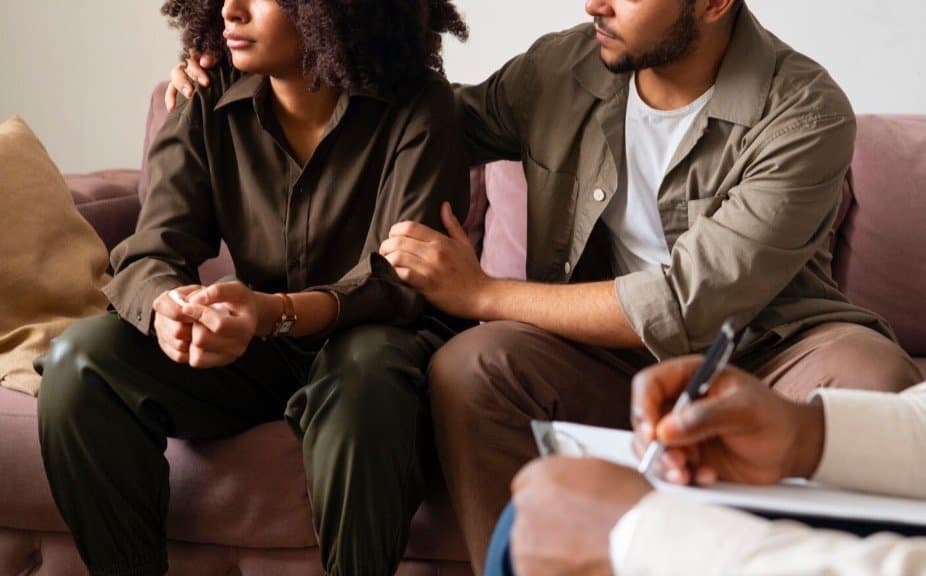
Couple sitting together in a therapy session

Couples Therapy · Ontario

Trauma-Informed Couples Therapy in Ontario

Trauma-informed couples therapy supports relationships impacted by childhood or adult trauma, attachment trauma, or PTSD, where reactivity, shutdown, or defensiveness make connection hard. We go beyond communication tools to help you understand triggers and navigate them together in healthier ways.

Virtual & In-Person
Across Ontario
Now Accepting Couples
Free intro call available
12-20 Sessions
Personalized to your situation

The Approach

What is integrative trauma-informed couples therapy?

This trauma-informed couples therapy program integrates multiple evidence-based treatments, including CBT, EFT, ACT, and DBT, and is carefully personalized to each couple's unique history, strengths, and challenges. The process is structured, goal-oriented, and focused on both insight and practical change. Many couples seek therapy for communication problems, but when trauma is part of the picture, communication tools alone are often not enough. Trauma can heighten emotional reactivity, intensify fear of abandonment or rejection, and lead to patterns of shutdown, defensiveness, or escalation that feel difficult to control. A trauma-informed approach recognizes that these reactions are not character flaws, but nervous system responses shaped by past experiences. Research shows this approach reduces conflict, strengthens emotional connection, and supports lasting improvements in both relationship satisfaction and trauma-related symptoms.

At a Glance

  • Duration

    12 to 20 sessions

  • Format

    Both partners attend sessions together

  • Delivery

    Virtual across Ontario · In-person in Toronto

  • Approach

    Integrative: CBT, EFT, ACT, DBT

  • Assessment

    Joint and individual intake sessions

Our Approach

What “trauma-informed” means for couples

Trauma-informed is not a technique. It is a way of understanding what is happening between two people that takes into account how both partners got here.

We look at both people, not just the relationship

Each partner brings their own history into the relationship. A trauma-informed approach assesses both partners individually before building a joint treatment plan, so the work is grounded in what is actually driving the patterns rather than what those patterns look like on the surface.

Reactions are understood before they are challenged

Defensiveness, shutdown, emotional flooding, and withdrawal are often nervous system responses shaped by past experiences. Rather than treating these as communication failures, this approach helps both partners understand where they come from and builds the safety needed to respond differently.

Evidence-based treatments are adapted to your situation

EFT, CBT, ACT, and DBT are all effective approaches, and all can be modified when trauma is part of the picture. The pace, sequencing, and focus of treatment are adjusted around your actual history rather than applied as a fixed protocol.

Is This Right for You

When standard couples therapy has not been enough

Instead of focusing only on surface-level conflict, trauma-informed couples therapy explores the underlying triggers and attachment patterns driving the cycle. By addressing both the emotional roots and the relational patterns, this approach creates deeper, more sustainable change. The program typically runs 12–20 sessions, depending on each couple's needs and circumstances.

A trauma-informed approach does not mean every session is about the past. It means the past is accounted for in how sessions are paced, how the therapeutic relationship is built, and how each technique is applied. Many couples find that this changes what is possible in the room.

Book a Free Intro Call

This may be the right fit if you:

  • Have tried couples therapy before but found it did not reach what was actually driving the conflict
  • Suspect that one or both partners carry trauma histories that shape how you respond to each other
  • Notice patterns of shutdown, flooding, or defensive reactivity that seem bigger than the argument itself
  • Have a complex picture that does not fit neatly into a single-protocol program
  • Want an approach that assesses your full history before deciding what treatment looks like

Concerns We Treat

What this therapy is used to treat at our clinic

This approach is suited to couples where one or both partners carry trauma histories that are shaping the relationship, whether or not a formal diagnosis has been made.

Core Techniques

What you'll work on

Sessions move through three phases: understanding what is driving the patterns, building safety and new ways of responding, and sustaining those changes over time.

Understanding triggers

  • Identify how past trauma shapes emotional reactions in the relationship
  • Develop shared language for navigating triggers together

Reducing escalation and shutdown

  • Interrupt conflict cycles before they escalate
  • Build emotional safety as a foundation for deeper communication

Empathy and responsiveness

  • Strengthen mutual understanding and attunement between partners
  • Develop compassionate responses to each other's nervous system reactions

Trust and lasting connection

  • Rebuild trust and intimacy after relational ruptures
  • Sustain relational gains with practical long-term skills

Treatment

Personalized to your full picture

Treatment is not selected by diagnosis alone. Your therapist will draw from whichever combination of evidence-based approaches best fits both partners' histories, the patterns showing up in the relationship, and what has worked or not worked before.

For some couples that means EFT to address attachment patterns alongside CBT adapted for trauma-related avoidance. For others it means DBT skills for emotional dysregulation before any communication work begins. For couples where one partner has BPD or PTSD, a structured protocol like SAGE or CBCT may be incorporated into the integrative plan.

The treatment plan is built after assessment, not before, and adjusted as the work develops.
Common Questions

Frequently asked questions about trauma-informed couples therapy

Treatment usually runs 12 to 20 sessions, depending on how complex the underlying patterns are, whether individual trauma processing is needed alongside the couples work, and how quickly safety and trust build in the room. Your therapist will give a clearer picture of what to expect after the intake assessment.

Not necessarily. This approach is well-suited to any couple where trauma-related patterns, such as reactivity, shutdown, difficulty with trust, or fear of abandonment, are shaping the relationship, regardless of whether a formal trauma diagnosis has been made. A thorough assessment will clarify fit.

Standard couples therapy often focuses on communication skills and conflict resolution. When trauma is part of the picture, those tools tend to break down under emotional pressure because the nervous system responses driving the conflict are not addressed. A trauma-informed approach works on those underlying responses first, which makes communication work more durable when it is introduced.

The approach is integrative. The therapist draws from whichever combination of EFT, CBT, ACT, DBT, CPT, and EMDR best fits both partners' histories and the relationship's specific patterns. This is not a fixed protocol: the plan is built around what is driving your particular situation.

Yes. Integrative trauma-informed couples therapy can work alongside individual therapy for either partner. If both are running at the same time, your therapist may coordinate with the individual clinician where appropriate. This will be discussed during the intake.

Programs like SAGE and CBCT are structured protocols designed for specific presentations: BPD or PTSD in one partner. This integrative approach is for couples who do not fit a single-protocol model, where the picture is more complex, or where both partners carry trauma histories that need to be held together. It is the most flexible of the couples therapy options offered at the clinic.

Most sessions are covered in full or in part by extended health benefit plans. We provide detailed receipts for all sessions to support reimbursement. Visit our Fees and Coverage page for full details.

Have a question not listed here? Visit our full FAQ page or get in touch directly.

Take the First Step

See if trauma-informed couples therapy is the right next step for your relationship.

Our intake process assesses your full picture before recommending a treatment approach and therapist match.

Book an Intro Call

Virtual & In-Person · Ontario

Getting Started

Starting therapy is simple and supportive.

  1. 1

    Get in touch by booking a call online with our intake coordinator or by completing the contact form. You can also email admin@traumacarepsychology.ca or call (647) 456-7500.

  2. 2

    Complete a 20-minute intake call so we can determine the best therapist fit and treatment direction. Alternatively, browse our clinician directory and book a free 20-minute consultation directly with a clinician you feel is a good fit.

    Browse our clinician directory →
  3. 3

    Schedule your first session and begin a personalized treatment plan based on your goals and concerns.

Contact Us

Fill out the form and our intake coordinator will be in contact shortly.

Virtual care across Ontario · In-person in Toronto.